
Chinese nationals feature heavily in online fraud out of Africa.
Operation Serengeti (2 September - 31 October) targeted criminals behind ransomware, business email compromise (BEC), digital extortion and online scams.
More than 35,000 victims were identified during the operation, with cases linked to nearly USD 193 million in financial losses worldwide.

Private sector partners, including Internet Service Providers, also played a vital role by sharing intelligence, supporting analysis and disrupting criminal activities. They provided on-site support and offered round-the-clock remote assistance to patch vulnerabilities and secure critical infrastructure for the participating member countries.
Information provided by participating countries of ongoing cases with INTERPOL fed into 65 Cyber Analytical Reports that were produced to ensure actions on the ground were intelligence-led and focused on the most significant participants.
National case studies
In Kenya, officers cracked a case of online credit card fraud linked to losses of USD 8.6 million. The funds, stolen through fraudulent scripts run after altering the banking system’s security protocol, were promptly redistributed by the group via SWIFT to companies in the United Arab Emirates, Nigeria and China and subsequently, to digital asset institutions offering trading and financial services regulated in multiple jurisdictions. Nearly two dozen arrests have been made so far.
Eight people, including five Chinese nationals, were arrested in Senegal for a USD 6 million online Ponzi scheme affecting 1,811 victims. A search of their flat uncovered over 900 SIM cards, USD 11,000 in cash, phones, laptops, and copies of victims’ ID cards.
Nigerian authorities arrested a man accused of running online investment scams. He is believed to have made upwards of USD 300,000 by luring victims through messaging platforms with false promises of cryptocurrency returns.
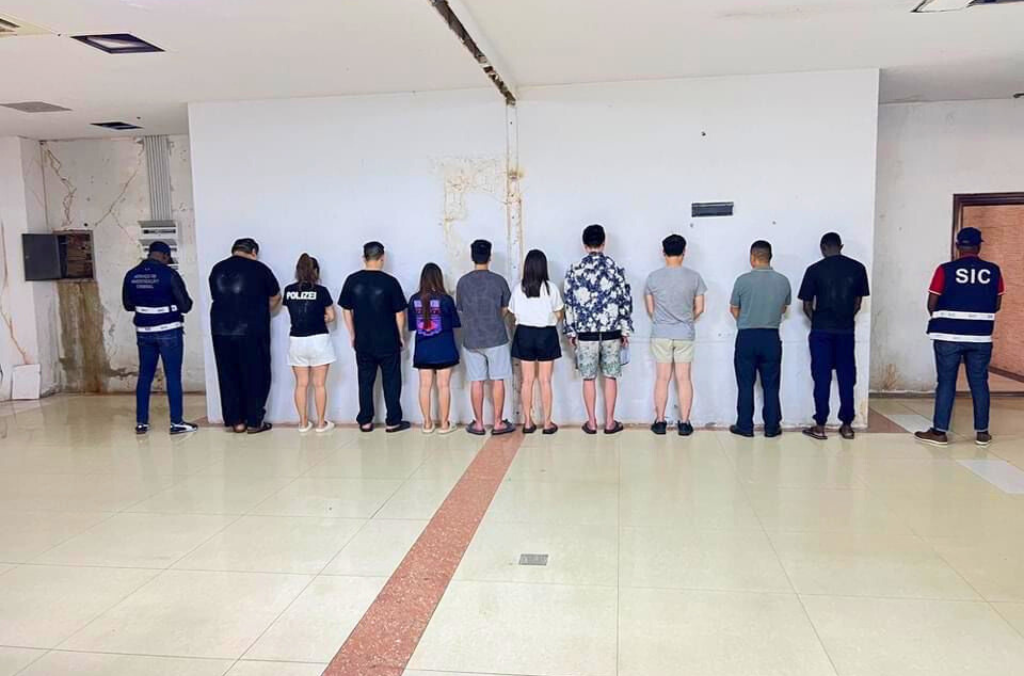
In Cameroon, authorities arrested a group suspected of trafficking victims from seven different countries to run a multi-level marketing scam. After paying a “membership fee”, victims were promised employment opportunities or training but once in Cameroon, they were held captive and obliged to lure others into the scheme to gain their freedom. Initial estimates show that the group had already pocketed at least USD 150,000 in fees.
Angolan investigators dismantled an international criminal group running a virtual casino in Luanda. The group, which primarily targeted Brazilian and Nigerian gamblers, defrauded hundreds through its online platform, offering a percentage of winnings to members who recruited new subscribers. Some 150 arrests were made, with officers seizing 200 computers and more than 100 mobile phones.
Operation Serengeti was carried out with funding of the UK’s Foreign, Commonwealth and Development Office, the German Federal Foreign Office and the Council of Europe.
Participating countries:
Algeria, Angola, Benin, Cameroon, Côte d'Ivoire, Democratic Republic of the Congo, Gabon, Ghana, Kenya, Mauritius, Mozambique, Nigeria, Rwanda, Senegal, South Africa, Tanzania, Tunisia, Zambia, Zimbabwe
Operational partners:
Cybercrime Atlas, Fortinet, Group-IB, Kaspersky, Team Cymru, Trend Micro, Uppsala Security
Images courtesy Interpol / participating agencies
----- ADVERTISEMENT ----

