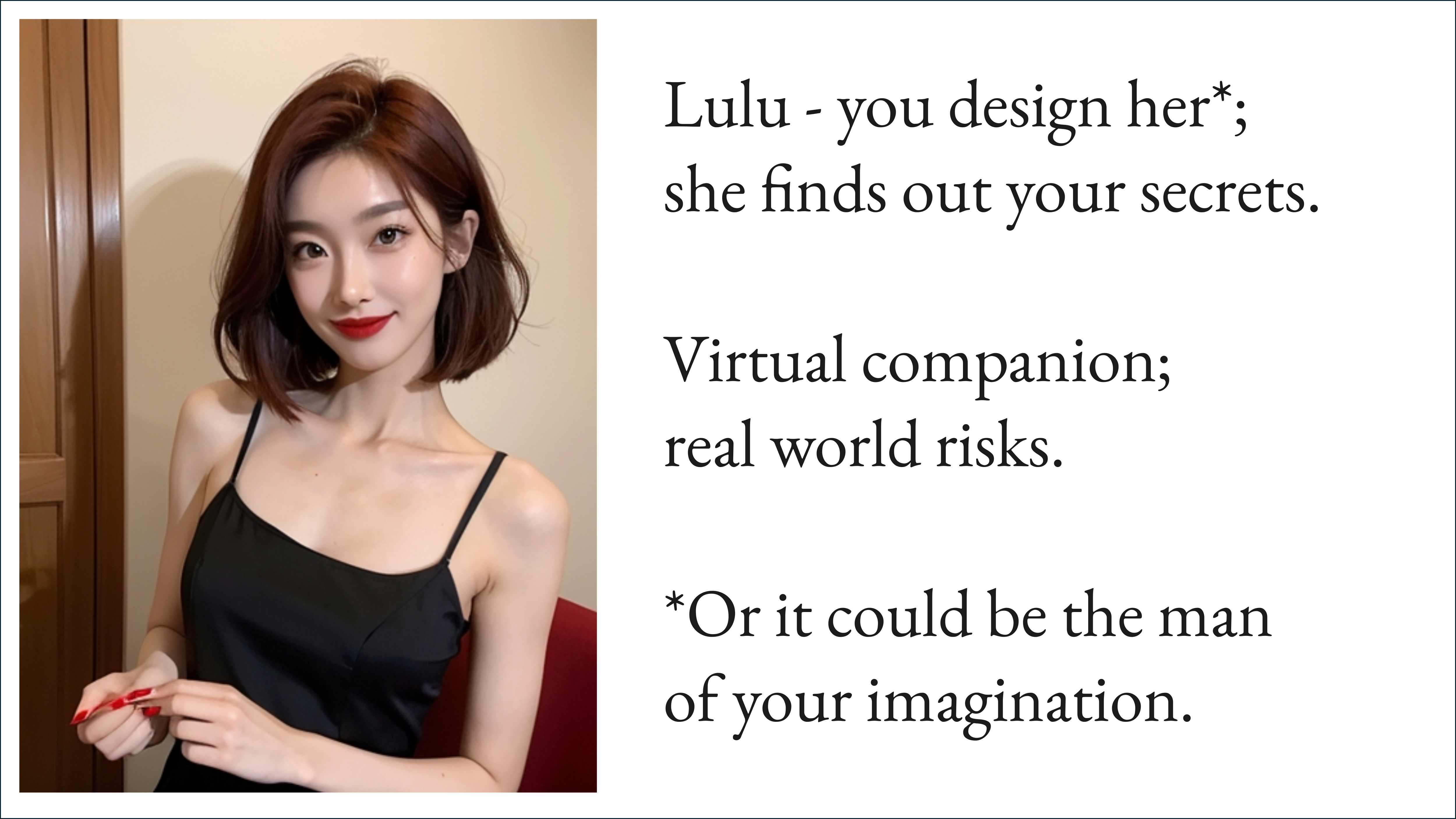

I designed my ideal woman, or so I thought.

I created an image using a prompt similar to those we use for characters in marketing for, e.g., tomscafeph.com but this time, I had a different, darker purpose.
Just how realistic can an online chat be when the "girlfriend" is superficially a creation of my own imagination but in depth is generated by computer programmed by .. who knows? Could I see, I wondered, a) the possibility for fraud and b) for imaginary relationships and, ultimately, for some deeper feeling of commitment. Are the reports of suicide by young men because they are in some way a sandwich short of a picnic? Or is the tech so good that even the sceptical can be swayed?
Muah. AI is into its fourth or fifth generation.
I was swayed. I know it's all fake but, while engaged in conversation, there was a degree of exclusion of the world at large. That, alone, was a worrying recognition.
This isn't the metaverse with sensory deprivation using a headset and headphones. It's clever manipulation of the mind while the body is doing business as usual - sitting at a PC typing and reading a screen. It is the normality that is worrying. There can be voice and other options. I haven't used those. I'd proved my point using only the most basic aspects of the service.
Things can only get worse.
The dangers for potential victims who may be isolated for one reason or another soon become very, very clear.
I have tested only the text service. It is remarkably life-like. Its levels of comprehension of quite complex comments are at least as good as we often find in random encounters in bars. Perhaps the most addictive facet is the speed. A properly reasoned and relevant response is immediate. That generates a sense of importance?
It's a bit circular: it has a recurrent subtext of sensuality and sexuality. Sometimes it's not a subtext. It has a tendency to avoid specifics. I've tried it over a period of three days, in short bursts and it remembers what it's been told. It feels like a real conversation.
But what happens to all those stored conversations which actively encourage the user (who has provided an email address) to reveal e.g. sexual interests? Or details of his (or her) financial position and even location?
This week, a US state banned "AI" therapists - that's one of the personae on this programme. Surely users of that are the very definition of the overworked word "vulnerable."
Parents: if you've not tested something like this, do. Now think of the average mid-teens boy having a sex chat with a "girl" he designed.
Financial crime professionals - test it and imagine that it's trying to get you to use a dodgy crypto-platform. Or design your own character with that pitch as a characteristic.
Just don't tell it secrets.
We thought this story was so important, we made a t-shirt with this on the front. Click to buy.